Navigation Pages

Wednesday, December 10, 2014

Navigation

Navigate the sections of the portfolio using the "Section Label" panel on the right side, or by clicking any of the following:

Sections Label


1. Reflection on Project Approach
2. Problem Solving Schemes
3. Ability Development
4. Bad Design
5. Design Problem
6. Design Strategy

Tuesday, December 9, 2014

6. Design strategy

What I have leaned in the class


From this class, I have gain insights in engineering design process. The first thing is to start with a need. without a need, there is no market. This step is aided by 
analysis on customer requirements, engineering specifications and house of quality. Then it is to conceptualize the functions for satisfying the need. I have learned several ways to generate more concepts both individually and in groups. After plenty of ideas are generated, it is to evaluate them against the requirements and select the best concepts. I have learned the screening matrix that helps to eliminates bad designs and the use of decision matrix in aiding concept selection. During the embodiment design phases, designer should analyze the product in terms of economics, optimization, material selection, reliability, safety, environmental considerations, and ethics. The class taught me many different factors  and interaction should be considered when designing a product.

I have also learned the importance of utilizing both convergent and divergent thinking in developing innovative designs.The final take-away from this class is this phrase - "form follows function". In designing a system or a product, the first thing is to do is to think about what the exact thing that it must do. After that,  I should evaluate how the system execute functions in terms of practical solution. The function should be not constrained by the form.


My General Design Philosophy


My design philosophy is to design a product that is simple, friendly, efficient: The product should be simple, in which the usage is convenient; the operation is easy and clear; and maintenance is effortless. By friendly it means that there should be enough considerations on human-artifact interactions. The product should be user-friendly, in which the user here is not only limited to customer, but it includes operator, maintenance staff and production personnel. Also, the artifact-artifact interaction can't be ignored: the product must be able to cooperate smoothly with other product or system. The product should also be efficient in terms of performance, adaptation to fast-paced life and ability to work in well-organized way. It should achieve its maximum productivity with minimum amount of expense (money or energy). Considering more resources would go depleted as human population spikes in the next 50 years, the amount of energy to product or to use the product should be kept at minimum.

Good Design would satisfy the following: criteria

  • perform as expected and may exceed expectation
  • efficient
  • convenient
  • easy and clear operation 
  • reliable
  • easy to maintain and distribute
  • cost is
  • optimized 
  • minimal harm to the environment
  • pleasant aesthetics
  • does not violate any of the ethic codes during production, distribution, usage or after end-life
Bad Design may have the following criteria:
  • does not function as expected
  • fail frequently
  • poses danger to any of the customer groups and the environment
  • irritate users
  • difficult and hard to operate
  • higher cost than fellow competitors, yet worst in performance
  • not reliable 
  • low resistance to fatigue, deformation and chemicals
My background in engineering helps me to design product in a systematic way. Being a customer and user myself helps me to realize the importance of simpler interface and lighter operations. One of my best strength is to adapt and integrate. The discipline of engineering can be applied to biology, chemistry, art, architecture and many other fields that hugely impacting the society. My interest in biological system aids my understanding of biomechanics and integration of physical law in physiological function. Also, my appreciation of art and music benefits me for raising the level of aesthetics in my design. Design is tightly warped around life itself, and i hope my experience can aid in development of my future designs.

5. Design Problem

Interested Design Problems


The following is a list of personal design problems that I am interested:
  1. House Hold Waste Sorting machine & network: I am interested in technology that will benefit the environment. The waste sorting machine would help the recycling process occurred every household. I always adore the daily recycling process in Japan, Switzerland and other European countries, because their process is more efficient and well-known to general public then that in United States. In US, the recycling process in the community is way to simple, in which we normally put anything we think that is recyclable in the green garbage bin and other trash in the blue garbage bin. The pickup is normally once per week. Whereas in Japan, the garbage must be separated completely from each other: burnable, non-burnable and recyclables [Reference]. Burnables includes regular household trash, such as paper, clothes, wood. Non-burnables includes metal, glass, Styrofoams and the like. Recyclables include cans and bottles. The trash are put in clear or semi-transparent bag and left in trash pickup points available on every block. It would be hard for US residents to change to the standard that Japanese community have. Hence, I am thinking about designing a waste sorting machine in aiding the recycling process: The machine is compact and can be installed in every household and it automatically separate the trash into three categories: burnables, non-burnables and recyclables.
  2. Multi-pigment Drawing tool: I enjoy drawing and sometimes bother by the fact that you will need a large toolbox to store large amount of pen or pencils that can draw different pigments. Especially when you want to draw as anywhere you go, carrying a large box around is rather cumbersome. Hence, I want to design a single specially-engineered pen that can present texture of different pigments. The pen will have several knob that can be used to adjust the wavelength, light refection, transmittance or absorbency, which is associated with the pigment properties. The goal is to have a pen, such that you can change the texture and color of the material drawn out of the pen via several knob turning!
  3. Integrated Robotic leg and wheel chair: I am very interested in the integration of engineering and biological science in developing products that aid everyday life. I want to design robotic legs that not only help disabled to walk and run, but also can reconfigured into comfortable wheel chair when the user is tired. In the domain of aiding users to walk, the robot shall be ease the process of walking by providing mechanisms to reduce required force against inertia and gravity. The

Problems to be improved 


The following is a list of problems that I think can be improved or created primarily for others. 

  1. Diagnostic and Surgical Medical Devices: It is excited to see the development of surgical medical technology with implementation of intelligent devices that are capable of providing multiple functions. Diagnosis of a patient's condition is critical, since it utterly affects the type of treatment that he or she may received. A slight mistake made in judgment would danger a patient's life and potentially cause death. Small robotics devices are looking forward to be developed in aiding the diagnostic process, such that it can monitor the patient's physiological signals by going through a patient's bloodstreams. In terms of surgical medical devices, sophisticated robotics hand offer refined control over the procedure and aid the surgeons during surgeries. Either type of medical device advances would benefit everyone in the society.
  2. Waste Converter: Human population projects to increases exponentially, and sooner or later, the planet would run out of its natural resources. We need to find a way to obtain energy. Beside the well-known renewable energy such as solar, wind, tidal and geo-energy, is it possible to utilize fecal waste to produce energy? Combining chemistry, biology and engineering, energy in waste is extracted and is used to pay for the process. It would be a self-sustaining process, as long as human input waste, and it will eliminate the use of expensive water pipes, waste storage and other mediums that we use energy to get the waste out. It can also solves the sanitation problem in developing countries where they don't have money to build sophisticated sewage system and toilets.
  3. Wind Turbine Aerodynamic Noise Issue: Wind turbine generates clean and renewable energy and has relatively small environmental impact compared to other plants powered by fossil fuels. However, the aerodynamic noise produced by the rotor blades during operations has become a huge barrier to wind energy development. Development in noise reduction and noise control technology is important to increase the amount of land available for further wind projects. To date, there have been plenty of different noise control concepts, noise reduction studies and noise analyses for wind turbines, especially for the horizontal axis wind turbine. In solving the noise issue, residents would be more open toward wind turbine farm near the neighborhood and it would potentially aid in advances in wind turbine technology.

My Designs


In the following, a list of products, devices, processes and other things that I have designed are presented:

1- Mechanical Desk lamp (MAE 377 Project)

Many common lamps have fixed body and cannot rotate freely. It would cumbersome to move the whole lamp for matching the light to desired location. The product being proposed solves the problem because of its ability to pivot around the base and to stretch or extend its arm for reaching preferred location of light. The product is very useful to customers who are used to desk work and especially to those who tends to stay up late for work.  

This product is a desk lamp with pivotable arms existing in the market. The arms can be used to adjust the height of the lamp. The tensions in the extension springs would push the arm further back with an increasing angle with respect to its corresponding plane. The connective pin allows the knob and the shades to freely rotate up and down. The whole body of the lamp is able to revolve around the base.

I personally decided the geometry, material selection, parts and aesthetic for this product. The product is shown in the following engineering drawing with bill of material.
Figure 1: Mechanical Desk lamp Assembly Drawing with BOM
2 - Program: Wind turbine Tower Optimization

In my MAE 510 Wing Turbine modeling class, me and my group has written a program in Matlab to design the tower for a 100 KW fixed-speed, stall-regulated, wind turbine system.  The design is to be optimized with respect to material use, energy production, tower structural requirement and blade configuration, given wind profile. The flow chart below clearly present the flow of our program for optimization. 
Figure 2: Wind Turbine Tower Optimization Process Flowchart 
Using the program, our group is able to obtain a set of tower configuration that satisfy all the given constraints and objectives. The best configuration can be chosen depends on the need for lower cost or higher dynamic stability.

4. Bad Designs

The following contains "bad” designs that I think are inefficient, ineffective, inelegant, or provides solutions to problems that are not worth solving. 

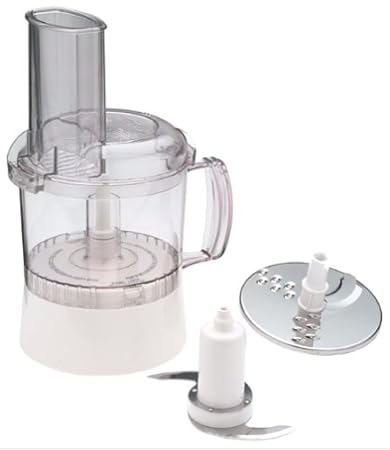
Product 1 - Cuisinart AFP-7 3-Cup Food Processor Duet Attachment
Cuisinart AFP 3-Cup Food Processor attachment [URL]
This is a food processor set for Cuisinart Smart Power Blender, which includes multiple components such as feed tube, pusher, work bowl, chopping blade and shredding disk. Based on my experience, the blade in the food processor tends to be loosen on the base, any the disc on the base is worn out after short usage, which leaves filth left inside the container. It becomes hard to clean and takes long time to clean. The connection at the base should be redesigned. 


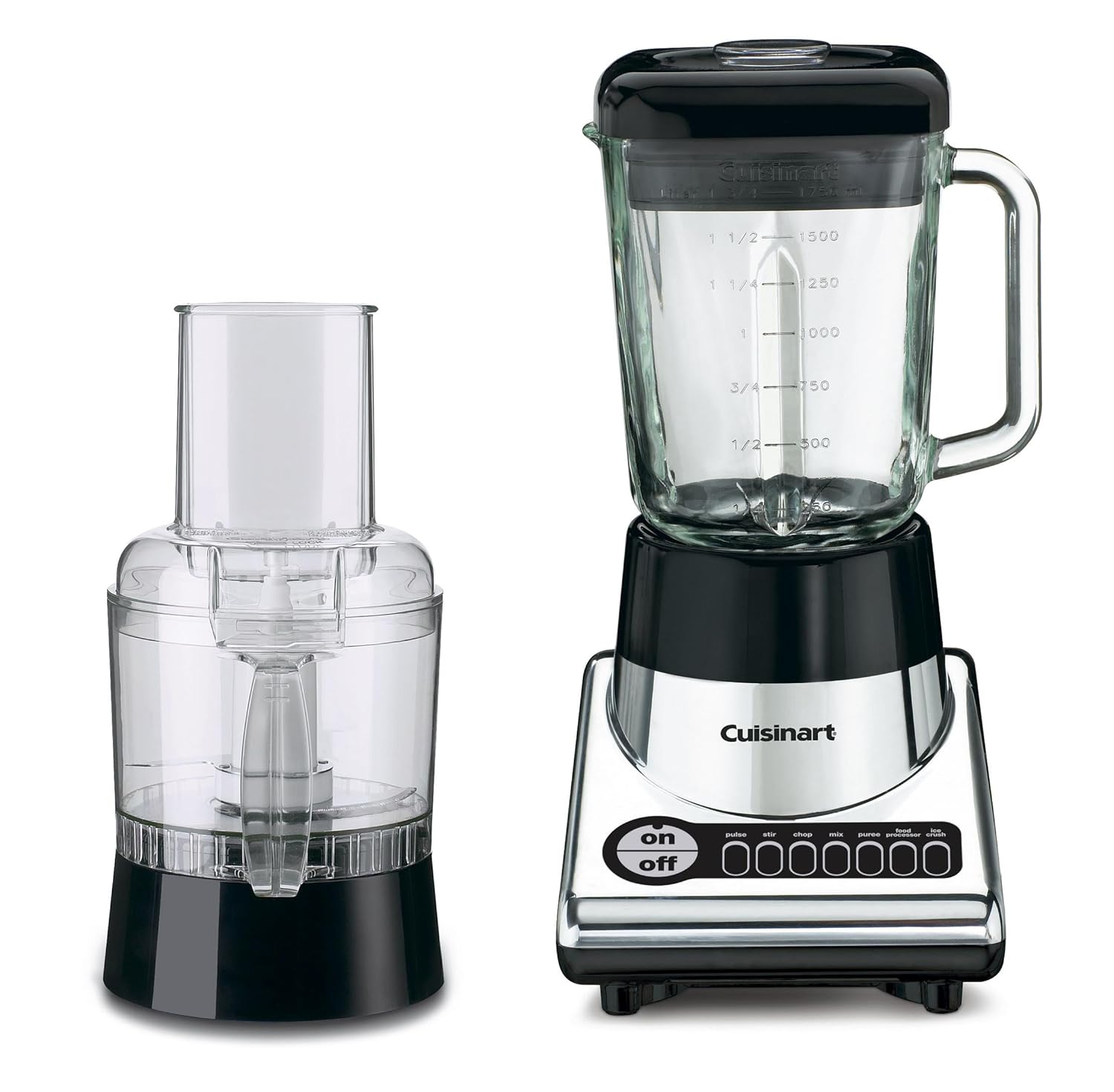
Product 2 - Cuisinart BFP-10CH PowerBlend Duet Blender and Food Processor
Cuisinart BFP-10CH Food Processor and Blender[URL]
This is the core blender with 3-cup food processor attachment. Based on my friend's experience, the motor of the product has serious problem. During usage, there was oil burned off on the motors, and things smelled funny. Also, it seems that the motor can not handle the blending  with consistency. There are also plenty of reviews reflecting motors burned out after several moth of usage.

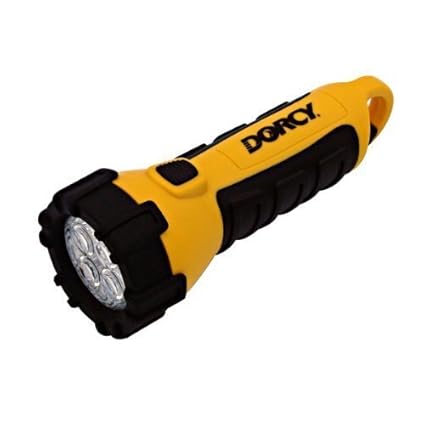
Product 3 - Dorcy 41-2510 Floating Waterproof LED Flashlight
Dorcy 41-2510 Floating Waterproof LED Flashlight [URL]
This flashlight is indeed cheap, yet does not function as well as described in advertisement, based on personal experience. First, it did not last long, and failed out of no reason. It was bright on land but did nor perform as well under water, and not quiet water proof. It tends to fail when it is submerged under water and had reliability issue.

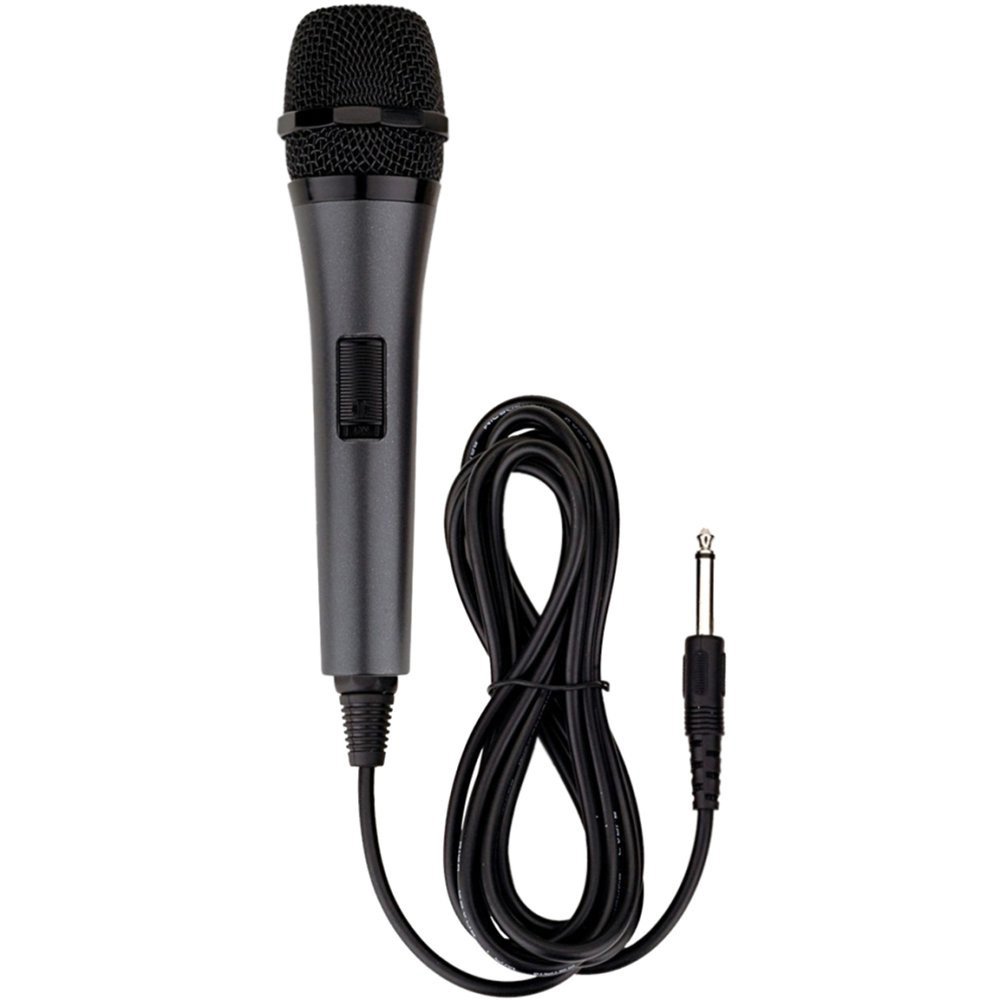
Product 4 - Singing Machine SMM-205 Unidirectional Dynamic Microphone
Singing Machine SMM-205 Unidirectional Dynamic Microphone [URL]

This microphone was bought for my cousin, and it does not last long. Most importantly, the quality went downhill as time went down. There is issue with the volume and on-off switch.

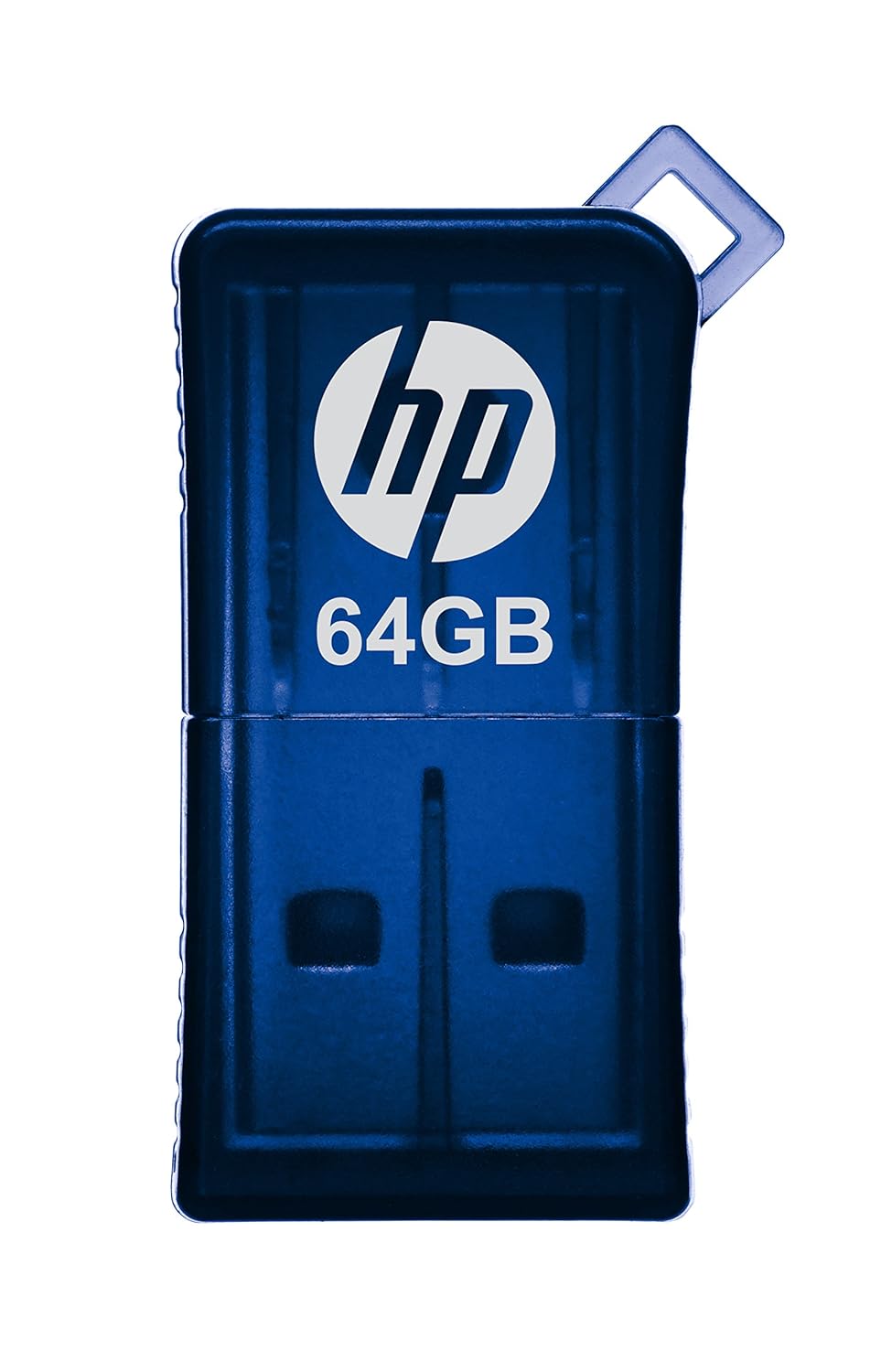
Product 5 - HP v165w 64GB USB 2.0 Flash Drive
HP v165w 64GB USB 2.0 Flash Drive [URL]
This flash drive has large storage and relatively cheap, however there is issue with the cap, which constantly comes off, That is very irritating. It needs better construction, so it won't need t put it back everything the cap falls off. Also, the aesthetic needs some improvement.

3. Ability Development

Relevant Material


In developing my abilities, the following contains lists of books, novel and articles that I have read in developing my abilities.


Periodicals

  • SAE Automotive Engineering
  • SAE Aerospace & Defense Technology
  • ASME Mechanical Engineering


Books
  • The Art of Electronics by Paul Horowitz, Winfield Hill - It is a reference on electronic circuit design in both analog and digital. It emphasizes methods actually used by circuit designers. I read it to refresh my circuit knowledge.

  •  The Engineering Design Process  By Atila Ertas - It helps me through the course and provide deeper understanding of engineering design process from recognition of a need, to definition of design goal, to manufacturing and etc.

Interesting Subjects


The following is a list of subjects that I want to know more about:

  • Electronics - This is definitely one of my weakest subject, yet it is very important to almost any field engineering nowadays. More and more mechanical systems and devices are transformed into electronic system or coupled with electronics for more sophisticated control. I will need to understand more of this in order to design better product.
  • Robotics - This is the study dealing with design, construction ad application of robots. It is used to automate a process, to gain more refined control, to aid in dangerous tasks that human can't do. 
  • Biomechanic - It is the study of biological systems using methods of mechanics. It is interesting in how understanding of law of physics and engineering is applied in the biological systems, and it helps to explains how physiological function works. It can be integrated with robotics in building more sophisticated medical devices.
  • Control Engineering - This discipline applies control theory to design systems with desired behaviors. It is involved within every engineering field, from aeronautics, to hydraulics, even biology, in terms of controlling hear pacer, insulin injection and etc. Understanding of this discipline refines control of a process, or utilization of a product and brings new level of functioning.
  • Material - It is about development, processing and testing of materials. when technology developed up to certain level, it saturates and can only advance when new and better materials are introduced. I am very interested in this subject, since It is deeply involved in any engineered product.
The following is a list of books that I want to read:
  1. MATLAB for Control Engineers - Katsuhiko Ogata
  2. Robotics, Vision and Control: Fundamental Algorithms in MATLAB - Peter Corke
  3. Aircraft Gas Turbine Engine Technology - Irwin Treager
  4. Fundamentals of Robotic Mechanical Systems: Theory, Methods, and Algorithms - Jorge Angeles
  5. How to Diagnose and Fix Everything Electronic - Micheal Geier
  6. Linear Control Systems Engineering - Moris Driels
  7. Using MATLAB to analyze and design control sytems - Naomi Ehrich Leonard, William Levine
  8. Theory of Applied Robotics: Kinematics, Dynamics and Control
  9. Applied Biofluid Mechanics - Lee Waite, Jerry Fine

2. Problem Solving Scheme

My Problem Solving Method


My problem solving method is taken in step-wise and systematically. First I need to analyze  what the crucial problem is and what goal I need to achieve. Secondly, l list out the set of usable tools, methods, resources that I have. I tend to research on the background of the problem before thinking about the solution. I am more comfortable in solving it until I understand the problem well enough and when I gather enough data. Next, I would like to list out sites where the problem may originates from. During this phase, I usually write the list on my notebook with a few sketches. After brainstorming, I apply the solution to see if it work. If it works, I compare it with the expected result to check if the problem is solved down the root. If the solution is not working, I would test for a few time first and try to conclude the reason that it isn't working, then switch to other solutions. Sometimes during problem solving, I would get frustrated if my solutions fail multiply time, then I would rest and work on other things to light up my mood, since I genuinely do not work well under bad mood. Usually I get enlightened during my rest, which help me generating more ideas on solving the issues. 

If none of my idea works, I tend not to ask other people, but turn to the internet and do more research and data gathering.


Other's Problem Solving Method


One of roommate solves problem in very different way. She is college student, studying in nursing. During problem solving, she would immediately jumps to solution phase without researching. If her solution does not work, she gives up quiet easily and asks friends or family members for solution. She tends to solve problem with people through discussion and debates.

My another roommate tend to be very frustrated when her solution does not work, and usually leaves the problem for couple hours before trying other solution. When one solution works, she would just go with it without checking if that is the best one available. 

My cousin who is a high school student uses trial and error method for solving problem. He would just literally try out any method our of his head and work it out to see if it works. He often connects his experience in video gaming to problem solving. He sometimes likes to draw and sketch his idea out on paper before execution.

My mother solves problem via on her past experiences. She relies on remedies rooted in her culture and adapts her solutions based on advice from elder for some one claims to be authority.

1. Reflection on Project Approach

The following is a reflection on how my design team approached the design mini-projects in this semester for MAE 451 class.


Management Strategy


Before the first meeting, our team exchanged phone number and available time for meeting in which we found out that we were all very busy and had very little chance meeting together. We mostly met once per week on Monday after 5 pm. We were aware of the meeting conflicts and tried to plan things ahead in each meeting to save times for the next meeting. Everyone was assigned for certain task in which should be completed by the next meeting for finalization. During the meeting, we worked on laptops and organized our work on Google Document for modifying it together more easily in real time. 

Everyone of the group understood individual responsibility, and did the best to attend every meeting and to make sure the project tasks completed on time. We mostly communicated in two ways: active discussion during meeting and emailing. Every member checked email on regular basis and communicated effectively through emails when discussing co-worked tasks. During meeting, we shared our thought and suggestions on how to fulfill each project requirement, and settle down agreement peacefully every time. The division of labor is pretty equivalent for everyone, since each member was aware of their role and was not hesitated to contribute.


Comparison to other Group


Our team's management strategy is effective and dedicated to project only. Comparing to other groups, it could be less "fun", because we were very concentrated on getting things done at our best. Our team did not know each other well enough, so we did not often talked about thing other than our project tasks. Our group dynamic was calm and effective in resolving conflicts or settling disagreement.


Role in the team


In the team, the responsibilities I took were checking if the our work fulfill the requirements, researching for additional information, completing several written tasks. For the first mini project, I was responsible for customer requirement and engineering specification sections. I organized the customer requirements that our group had came up for our product, categorized them in terms of customer groups. Also I developed and organized the corresponding engineering specifications and provided brief explanation.  For the mini project II, I organized the customer requirement section and provided neat explanation for its development. Furthermore, I researched extensively on our product in terms of material and optimization, in which was the part of embodiment design section that I had written.